Do I Need Extra Lighting for My Wedding DJ?
Most professional DJs include a lighting rig as standard — but is it enough for your venue? Here's exactly what wedding DJ lighting includes, what's extra, and when to upgrade.
Lighting is one of the most underestimated elements of wedding reception entertainment. The right lighting transforms a plain function room into an atmospheric venue. The wrong lighting — or no lighting at all — makes even the best DJ setup look amateurish. This guide explains what professional DJ lighting includes, what's genuinely worth adding, and when your venue's own lighting is sufficient.
What Most Professional DJs Include in Their Standard Setup
A professional DJ's standard rig typically includes a lighting package as part of their service. This generally covers:
- Moving heads (2–4) — automated lights that pan, tilt, change colour and produce beam effects in sync with the music
- LED wash bars or LED bars — static colour-wash lights that bathe the dance floor in atmosphere
- LED scanners — mirror-based lights producing sharp beam patterns across walls and ceilings
- Strobe / effect lighting — used sparingly at peak moments
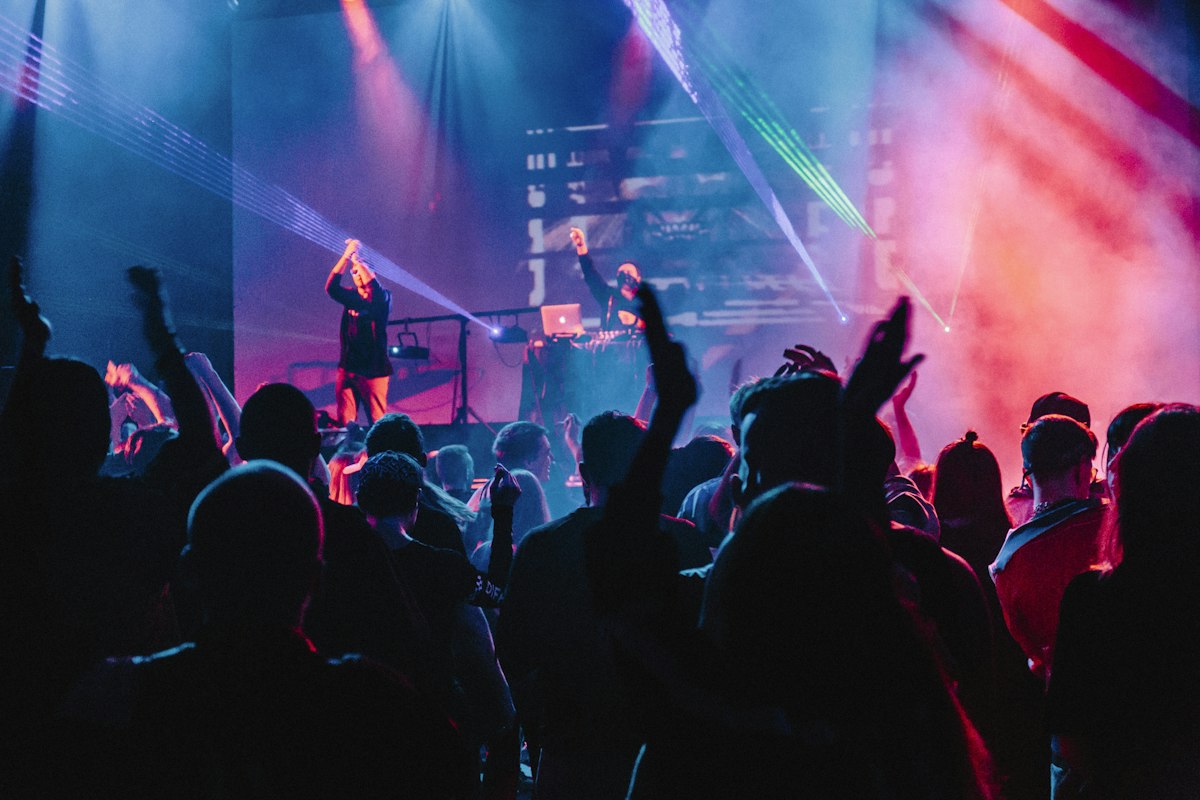
- Haze machine — makes lighting beams visible in the air, dramatically increasing visual impact
This standard package is sufficient for most party-format events and works well in medium-sized reception rooms. However, for weddings with specific aesthetic goals — particularly in larger or more architecturally interesting venues — additional lighting options can make a meaningful difference.
What 'Extra' Lighting Actually Means
| Lighting Type | What It Does | Typical Additional Cost |
|---|---|---|
| LED Uplighters | Colour-wash the walls of your venue in any colour — transforms the room's atmosphere entirely | £150 – £400 depending on venue size |
| Gobo / Monogram Projector | Projects your initials, a pattern or starlit design onto a wall or floor | £100 – £250 |
| Starlit / Fairy Light Backdrops | Creates a twinkling curtain backdrop behind the DJ or top table | £150 – £350 |
| LED Dance Floor | White or black LED dance floors; standard chequerboard is a separate non-LED option | £400 – £900 |
| Festoon / String Lights | Warm overhead canopy of bulb strings — popular in barn venues and marquees | £200 – £600 depending on coverage |
| Pin Spot Lighting | Precise spot lights trained on cake, centrepieces or specific focal points | £100 – £200 |
| Neon Signs | Bespoke LED neon wording — 'Mr & Mrs [Name]', custom phrases | £150 – £400 to hire |
The Single Biggest Lighting Upgrade for Weddings: Uplighters
If there's one lighting addition that delivers the most noticeable improvement to a wedding reception for the least cost, it's venue uplighting. LED uplighters placed around the perimeter of your reception room bathe the walls in any colour you choose — your wedding colour scheme, a warm amber for romance, deep blue for drama, or white for elegance.
The difference between a room with uplighting and the same room without it is dramatic. Plain white hotel function rooms become atmospheric. Cold barn venues become warm and intimate. The effect shows clearly in photographs and is immediately noticed by guests on arrival. For £150–£300 across a medium-sized venue, uplighting is almost always worth it.
Does Your Venue Already Have Good Lighting?
Before adding anything, assess what your venue already provides. Some venues — particularly dedicated wedding venues and boutique hotel function rooms — have excellent built-in lighting systems that require no augmentation. Others (village halls, sports clubs, hired marquees) have bare fluorescent or basic overhead lighting that desperately needs supplementing.
| Venue Type | Typical Built-In Lighting | Additional Lighting Recommended? |
|---|---|---|
| Dedicated wedding venue (manor house, hotel) | Often good — atmospheric built-in systems | Uplighters and gobo only if budget allows |
| Barn venue | Variable — often exposed beams needing festoon lights | Festoon lights strongly recommended; uplighters beneficial |
| Marquee | Usually minimal — basic general illumination only | Uplighters essential; festoon or starlit ceiling recommended |
| Village hall / community centre | Typically flat fluorescent — poor for atmosphere | Uplighters essential; DJ lighting will do most of the work |
| Hotel function room | Usually fair — some warmth built in | Uplighters for colour; monogram projector if desired |
Lighting and Photography
This is an important practical consideration: bright, coloured lighting looks spectacular in person but can make evening photography more challenging. Rapid-moving lights produce motion blur. Saturated colour washes alter skin tones in images. Talk to your photographer about the lighting plan — most work brilliantly alongside DJ lighting and even use it creatively, but they appreciate knowing in advance what the room will look like.
One practical tip: ask your DJ to pull back on rapid strobe effects and fast-moving lights during key photography moments (first dance, group photos). A slow colour cycle during the first dance looks beautiful in photographs. A fast disco flash does not.
Practical Questions to Ask Your DJ About Lighting
- What lighting is included in your standard package — specifically what types and how many units?
- Do you offer LED uplighting as an add-on, and how many lights for my venue size?
- Can I choose the uplighter colour to match my wedding colour scheme?
- Do you offer a monogram / gobo projector?
- Can the lighting be adjusted to be softer during the first dance for photography?
- Do you bring a haze machine and is it appropriate for indoor use in my venue?
Is Extra Lighting Worth It?
For most weddings: yes, to at least some degree. Uplighters are almost universally worth adding — they transform the room at relatively low cost. A monogram projector is a nice touch if budget allows. A full starlit backdrop is genuinely stunning in the right venue. But even without extras, a professional DJ's standard lighting rig is vastly superior to no additional lighting — and is one of the reasons a professional DJ is worth the investment over a DIY playlist.
Motion Entertainment offers LED uplighting and wedding lighting packages alongside DJ hire across Bedfordshire, Hertfordshire, Buckinghamshire and London. Enquire for your date.
View Wedding DJ HirePrevious
Is a Photo Booth Worth It for a Wedding or Party?
Next
How Do I Keep Guests Entertained in the Evening at a Wedding?
Related Posts
Wedding DJ vs Band: A Real Cost Comparison (UK 2026)
A wedding band typically costs 3–5x more than a DJ. But is it worth it? Here's an honest, side-by-side cost and experience comparison to help you decide.
WeddingHow to Choose a DJ for Your Wedding (Without Making a Mistake)
Your wedding DJ will control the atmosphere for 4–6 hours. Here's a practical, no-nonsense guide to finding the right one — including the exact questions to ask before you book.